
The Dog Breed Famous for Its Natural “Dreadlocks” Is Even More Fascinating Than You Think
At first glance, the dog looks almost unreal—covered head to toe in thick, rope-like cords that resemble long dreadlocks. But this striking coat isn’t a grooming trend or a fashion statement. It’s one of the most unique natural coats in the dog world, and it belongs to a single, unmistakable breed: the Komondor.
Often called the “mop dog,” the Komondor’s corded coat is entirely natural and develops over time without human styling. While several long-haired breeds may appear shaggy or fluffy, only one dog’s coat naturally separates into dense cords—and it serves a very real purpose.
A Coat Designed for Protection
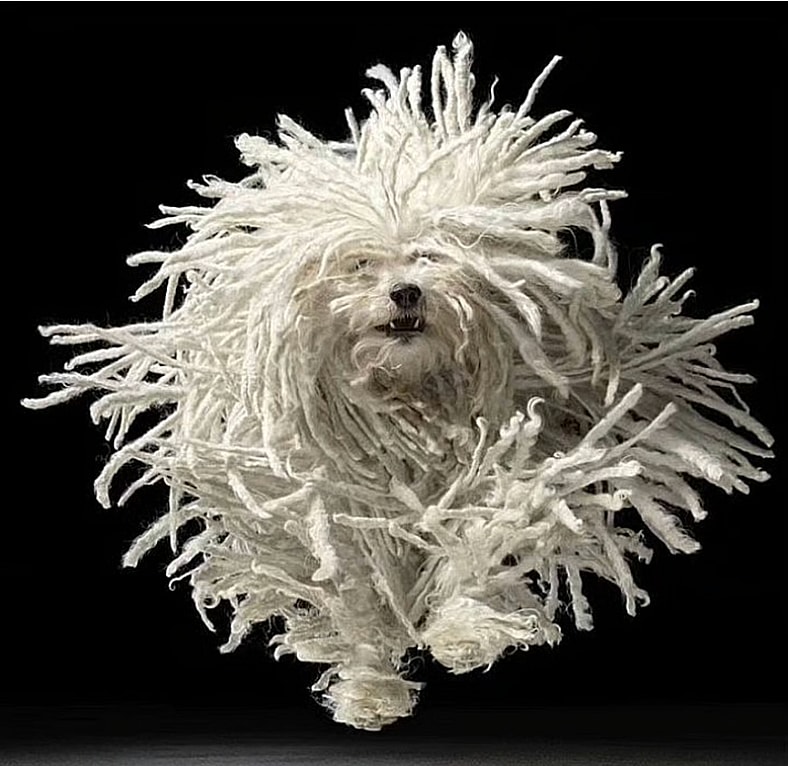
The Komondor originated in Hungary, where it was bred centuries ago to guard livestock, particularly sheep. Its iconic white cords weren’t just for looks—they provided serious protection. The thick, felted cords helped shield the dog from harsh weather and predator attacks, including bites from wolves. The coat also allowed the Komondor to blend seamlessly into flocks of sheep, making it harder for predators to distinguish dog from livestock.
Unlike breeds with long hair that require trimming or brushing to maintain a certain look, a Komondor puppy’s soft coat naturally begins forming cords as it matures. Over time, the hair mats into long, rope-like strands that continue growing throughout the dog’s life.
Why the Komondor’s Coat Is Truly Unique
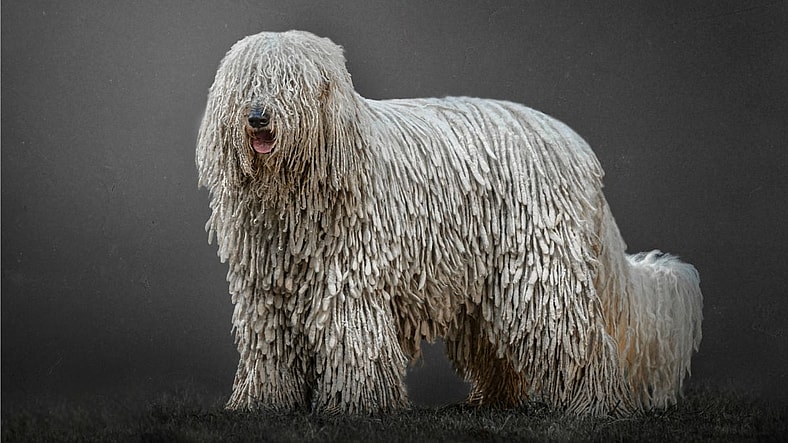
Several dog breeds are known for long or shaggy coats, including the Old English Sheepdog, Bearded Collie, and Briard. While these dogs may appear similar at a glance, their coats behave very differently. Their hair remains loose and must be brushed regularly to prevent random matting. If neglected, it tangles unevenly rather than forming intentional structure.
The Komondor stands apart because its coat naturally separates into dense, uniform cords as the dog matures—without brushing, styling, or human shaping. This corded formation is genetically driven and functionally evolved, making it one of the rarest and most distinctive coat types in the canine world.
More Than a Showstopper
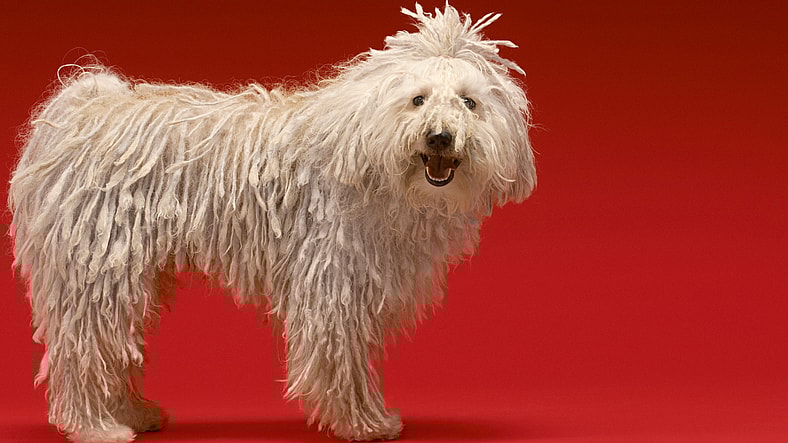
Despite its dramatic appearance, the Komondor is known for being calm, loyal, and deeply devoted to its family. Traditionally an independent guardian, the breed is protective without being aggressive and thrives when given a job or purpose. These dogs were bred to think independently, make decisions without constant human guidance, and remain steady under pressure—traits that still define the breed today.
Komondors are typically reserved with strangers but form strong bonds with the people they trust. Because of their size, strength, and protective instincts, they benefit from early socialization, consistent training, and experienced ownership. While their coat doesn’t need brushing in the traditional sense, it does require regular care to keep the cords clean and healthy.
Rare outside of Hungary, the Komondor remains a purpose-driven working breed rather than a decorative one—valued for its courage, intelligence, and unmistakable presence.
A History Woven Into Every Cord
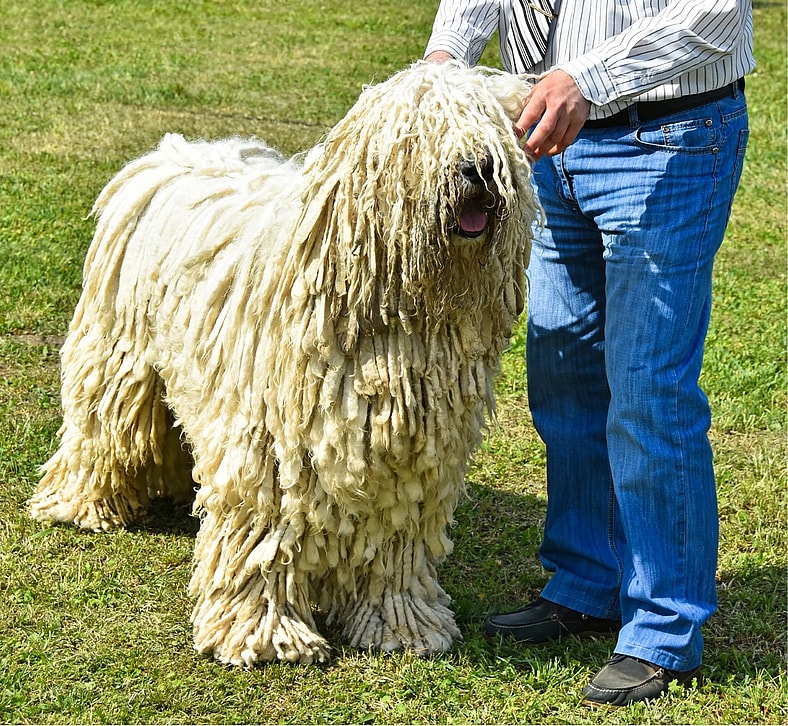
The Komondor’s unmistakable coat has earned it worldwide attention, but beneath those cords is a dog shaped by history, function, and survival—not style. Every strand tells the story of a breed designed to protect, endure, and work quietly alongside livestock for generations.
So if you’ve ever wondered which dog breed naturally wears “dreadlocks,” now you know: the answer is the Komondor—and there’s a powerful story woven into every single cord.